The Ultimate Guide to Leather Duffle Bags
Everything worth knowing before you buy a leather duffle, from size and leather grade to stitching, hardware, weight, and what a fair price looks like.
Everything worth knowing before you buy a leather duffle, from size and leather grade to stitching, hardware, weight, and what a fair price looks like.
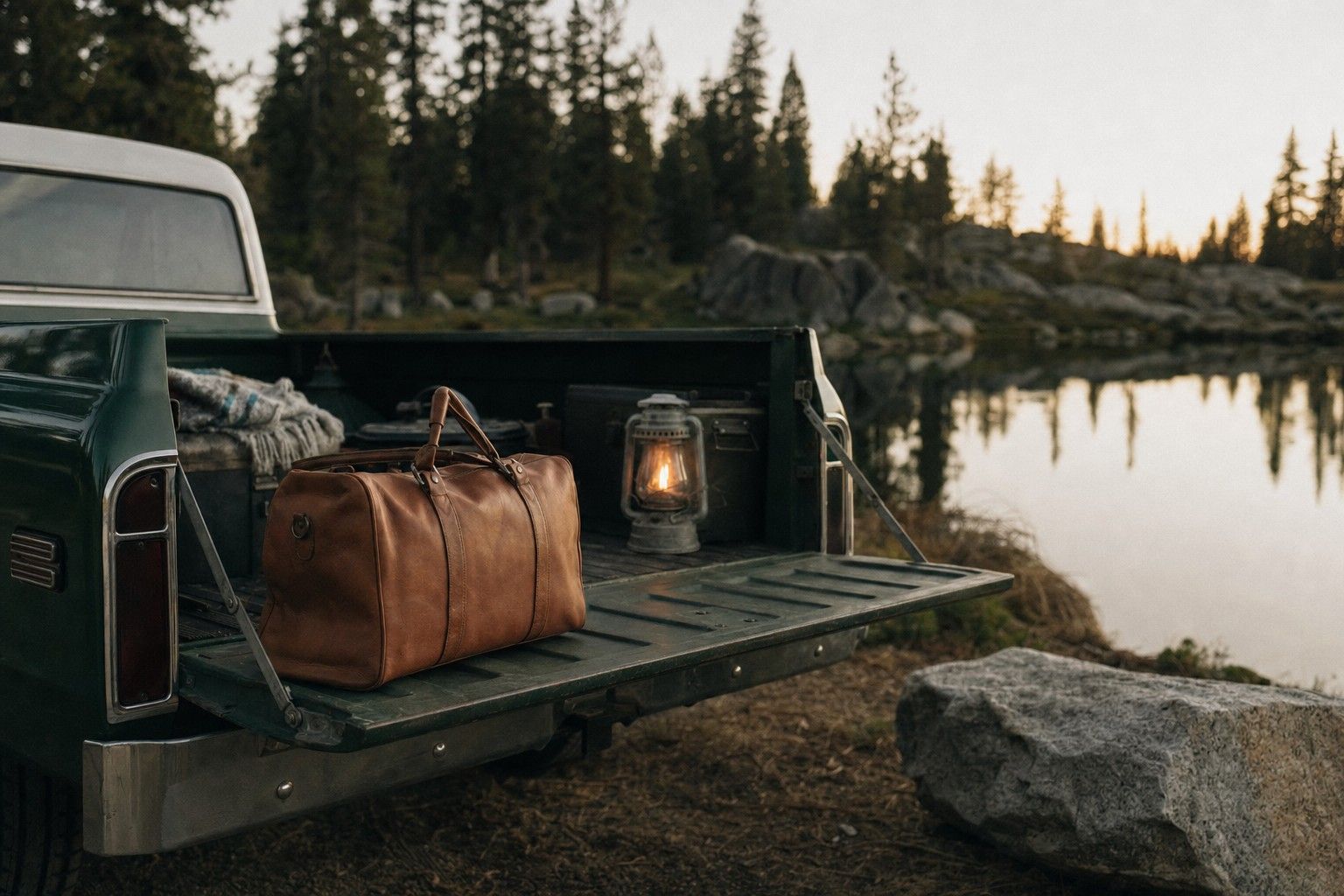
A leather duffle is one of the few travel purchases that can outlast the trips you buy it for. It is also one of the easiest to get wrong. Buy the wrong size and it sits in a closet. Buy the wrong leather and it cracks, peels, or looks tired in two years. Buy a bag with weak stress points and the handle tears off at the worst possible moment, usually on a train platform.
This guide covers the whole decision in one place. Each section links to a deeper guide if you want more detail.
A duffle is a soft, mostly unstructured bag with one large compartment, two grab handles, and usually a detachable shoulder strap. In leather, it is often called a weekender or holdall. The terms overlap almost completely.
It is good at:
It is not good at:
If most of your travel is weekends, short work trips, and drives, a leather duffle earns its keep. If you mostly take two-week trips with checked luggage, it is a nice second bag, not a main one.
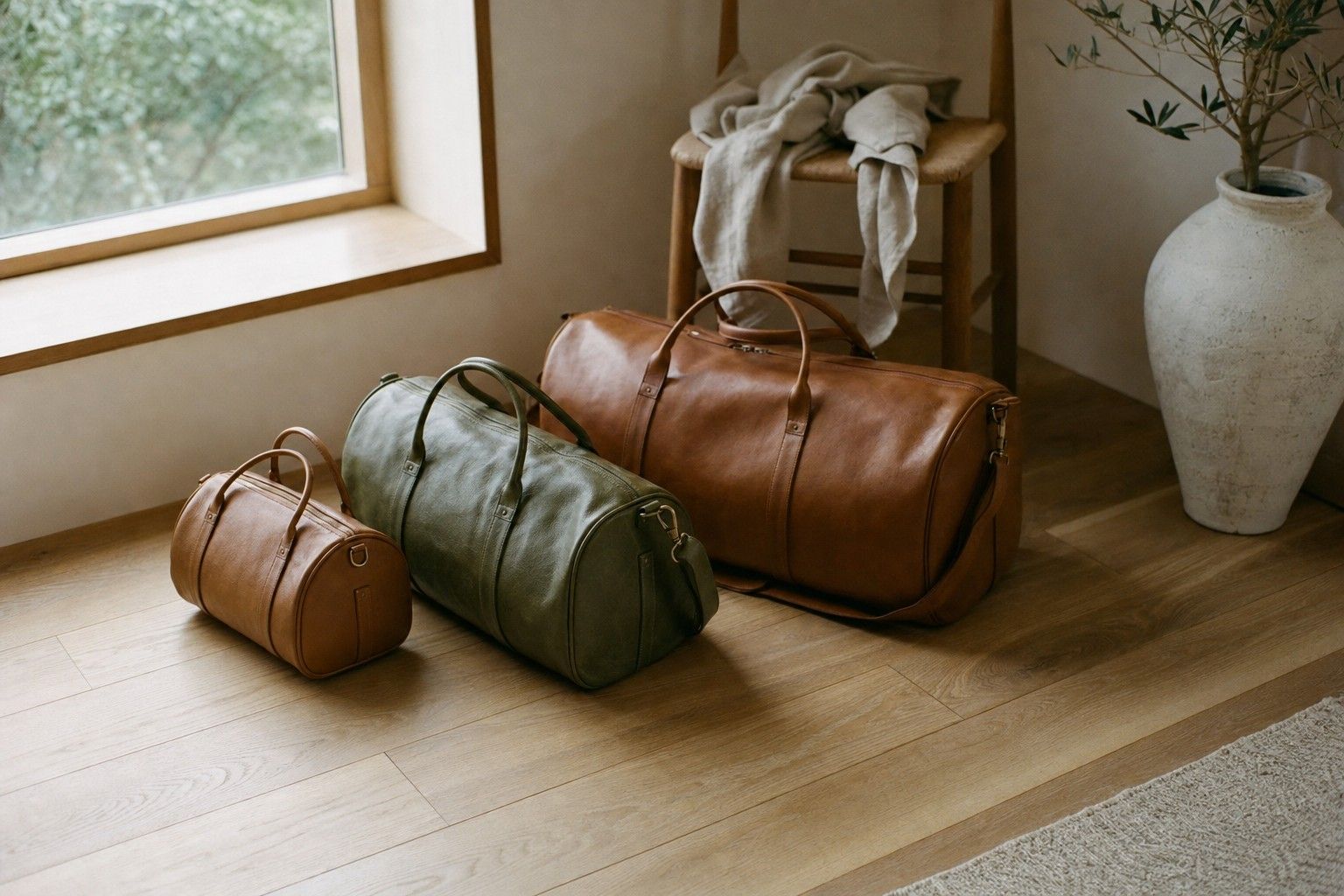
Size is the most common mistake, and it usually goes one way: people buy too big. A half-empty duffle slumps, the leather creases in odd places, and the extra room tempts you to overpack.
Think in liters, even when the seller lists inches. Rough guide:
| Trip length | Capacity | Typical length |
|---|---|---|
| One night | 25 to 35 L | 18 to 20 in |
| Weekend (2 to 3 nights) | 35 to 50 L | 20 to 22 in |
| Long weekend (3 to 5 nights) | 50 to 65 L | 22 to 24 in |
| A week or more | 65 L and up | 24 in and up, usually checked |
If a listing gives only dimensions, you can estimate volume: multiply length by width by height in inches and divide by 61 to get liters. Then knock off 15 to 25 percent, because duffles are rounded, not boxes. A 22 × 12 × 11 inch bag works out to about 48 liters as a box, or around 38 to 40 liters in practice.
For most people, a bag around 20 to 22 inches long and 35 to 45 liters is the one they will use most. Our duffle size guide goes deeper, including how body size and clothing style change the answer.
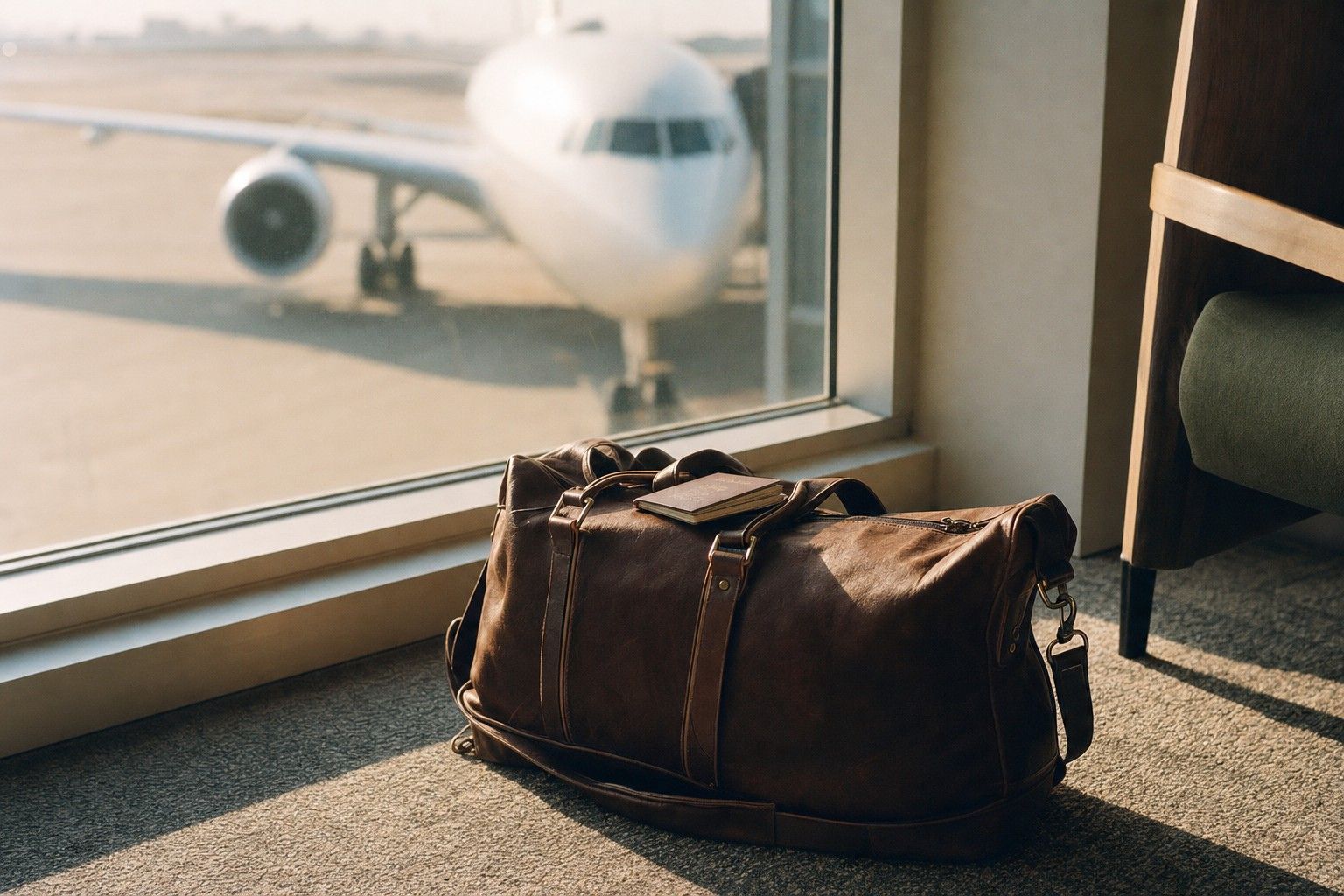
The major U.S. carriers (American, Delta, United, and Alaska) all use the same carry-on limit: 22 × 14 × 9 inches, including handles. A 20 to 22 inch duffle usually fits the length and height. Depth is where duffles go over, since many are 10 to 12 inches deep when full.
The saving grace is that a duffle is soft. Packed sensibly, it compresses to fit a sizer that a hard suitcase of the same nominal size never would. Overstuffed, it won’t.
Two things catch leather bag owners out:
Rules change often, so always check your airline before you fly. Our carry-on guide explains how to choose a bag that passes the sizer on most airlines.
Leather labels are confusing on purpose. Here is what the common terms mean for a bag.
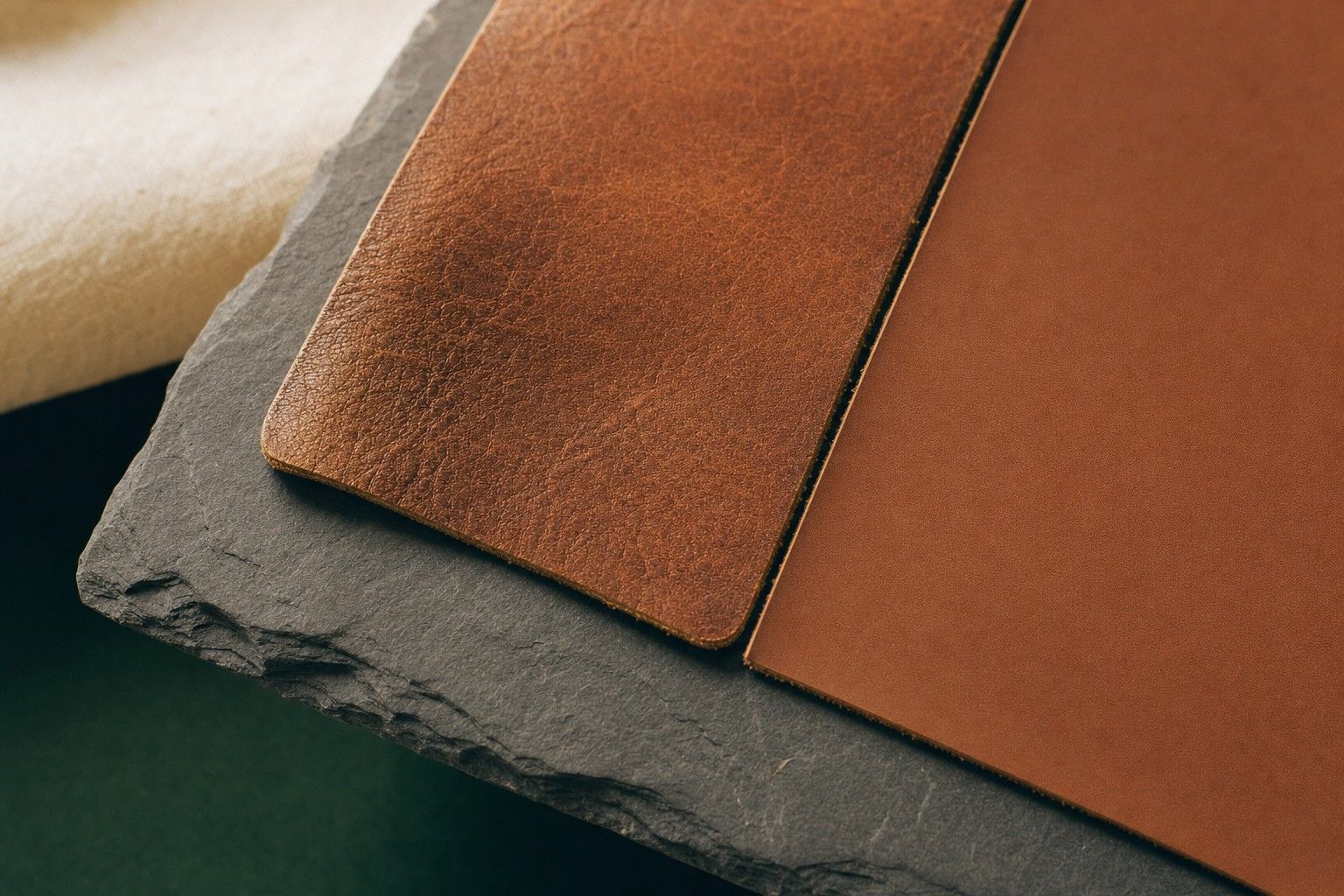
For a duffle that will be thrown in trunks, dragged through stations, and loaded every weekend, full grain is worth paying for. Top grain is a reasonable choice if you want a cleaner, more uniform look and accept a shorter life. We explain the trade-off in full grain vs top grain for travel bags.
You will also see vegetable tanned and chrome tanned. Vegetable-tanned leather is firmer, smells richer, and changes color more with age. It is also more sensitive to water. Chrome-tanned leather is softer and more water resistant from day one, and holds its color. Many good bags use either, and some combine both. Neither is automatically better. It comes down to how you want the bag to feel and age.
Leather thickness is measured in ounces, where one ounce is 1/64 of an inch (about 0.4 mm). Duffle bodies are usually in the 3 to 6 ounce range. Too thin and the bag sags and wears through at the corners. Too thick and it gets heavy and stiff. Around 4 to 5 ounces is a sensible middle for a weekender.
Two bags can use the same leather and last five years versus thirty. The difference is in a handful of places.
Stitching. Look for tight, even stitches with thick thread, typically nylon or polyester for strength. Around handle attachments you want reinforcement: a box-and-X pattern, extra rows, or rivets backing the stitches.
Handle anchors. The handles carry the whole load on every lift. The best bags run the handle straps down and around the body, or anchor them through a reinforcing patch. Handles stitched to a single thin tab are a warning sign.
Hardware. Solid brass or steel buckles, D-rings, and strap clips. Plated zinc alloy hardware is common on cheaper bags and is where many failures start, especially the strap clips. If the clip on the shoulder strap feels light, it probably is.
Zipper. A heavy metal zipper from a known maker (YKK is the one you will see most) is a good sign. A zipper is also the most common part to fail, so a bag whose zipper can be replaced by a cobbler or leather repair shop is a bag you can keep.
Lining and base. A lining protects the inside of the leather and makes the bag easier to clean. Brass feet or a reinforced base protect the bottom, which takes most of the abuse when you set the bag down.
When you are buying online, ask for close-up photos of the handle anchors, strap clips, and inside seams. A maker who is proud of the construction will happily send them.
Prices for leather duffles run from under $100 to well over $1,000. Very broadly:
Price alone tells you little. A $250 bag with full-grain leather, solid brass hardware, and reinforced handles will outlast a $600 bag with corrected leather and a thin handle anchor.
A duffle rewards a few habits:
See how to pack a leather duffle for a weekend for a full walkthrough.
For care, less is more. Wipe it down with a damp cloth when it is dirty, let it dry at room temperature away from heaters, and condition it once or twice a year, or when the leather looks dry. Store it stuffed loosely with paper or a pillow so it keeps its shape, in a breathable bag, never in plastic.
A good leather duffle is not a fashion purchase. Buy it the way you would buy a good pair of boots: for fit and construction first, looks second. It will look better in ten years than it does the day it arrives.